- Charged per token, per minute, or per second
- Cost scales with every successful campaign
- Your prompts and data leave your network
- Model changes under you without notice
- Rate limits during your busiest hour
- Nothing to hand over when the contract ends
Available for select projects
Every model.Your hardware.
Voice agents, support automation, security models, and diffusion stacks - specialized to run on machines you already own, priced per campaign instead of per token.
Discuss a project
The mission
Serious AI should not need a GPU cluster or a metered API. We distill, quantize, and specialize models until they run on ordinary CPUs - so the teams priced out of frontier APIs can run their own.
What we build
Four stacks.
One economics.
Each one is built to run on hardware you control, with a cost that stops moving the moment you deploy it.
01 / CALL CENTERS
Voice agents for call floors
Inbound and outbound agents that qualify, book, and update records at call-floor concurrency - running on machines you control, billed per campaign instead of per minute.
02 / SUPPORT
Customer support automation
Ticket triage, chat deflection, and drafted answers grounded in your own knowledge base, with clean escalation the moment a human should take over.
03 / SECURITY
Cybersecurity fine-tuning
Models specialized for log triage, phishing and anomaly detection, and analyst assistance - trained on your telemetry and kept inside your network.
04 / DIFFUSION
Diffusion and vision stacks
Image and video generation fine-tuned to your style and served on hardware you already pay for - no per-second render bill from a hosted platform.
The differencePer campaign. Not per token.
CPU-first inference on compute you already pay for.
Use cases
Built for the rooms
where volume costs money.
Five deployments, one economic idea: the model runs on hardware you control, so using it more does not cost you more.
01 / VOICE FLOOR
Every seat gets an agent that never queues.
Call floors pay twice: once for headcount that cannot scale with volume, and again for a hosted voice API that charges by the minute exactly when a campaign is working.
Scope this deploymentWHAT GETS DEPLOYED
- Inbound answering, qualification, and routing
- Outbound campaign dialing with live objection handling
- CRM, telephony, and calendar tool calls mid-conversation
- Barge-in, memory, and clean human escalation
- Call scoring and transcript evaluation after every run
REPLACES
Per-minute voice API bills and overflow call queues
OUTCOMECampaign volume stops being a budget decision.
The economics
Success should not
raise your bill.
Metered AI charges you most in the month your product works best. Owned deployment moves the cost to the machine and leaves it there.
- Priced per campaign or per stack, once
- Volume is capped by hardware, not by budget
- Data and telemetry stay inside your boundary
- The weights only change when you change them
- Concurrency you can plan and load-test
- Weights, code, and evals are yours at handover
Honest version
Owning the stack is not free - you pay for the hardware and the build. It is fixed. That is the entire point.
How CPU-first works
Small, specialized,
and proven on your task.
The mission is simple: every model we ship should run somewhere ordinary. Four steps get it there.
Right-size the task
Most production work is narrow. We define the job precisely enough that a small specialized model can beat a general giant on it.
Distill and fine-tune
Open-weight bases are trained on your data and your evaluation set until quality is proven on the task, not on a public leaderboard.
Quantize to fit
Int8 and int4 quantization, pruning, and runtime tuning bring the model down to what a commodity CPU server can serve.
Serve and measure
Batching, caching, and concurrency tuning, with latency, quality, and failure tracked in production from the first request.
If it needs a GPU, we will tell you.
Some tasks genuinely need one. Most production workloads do not, and finding out which is part of de-risking.
Selected work
Systems in
the wild.
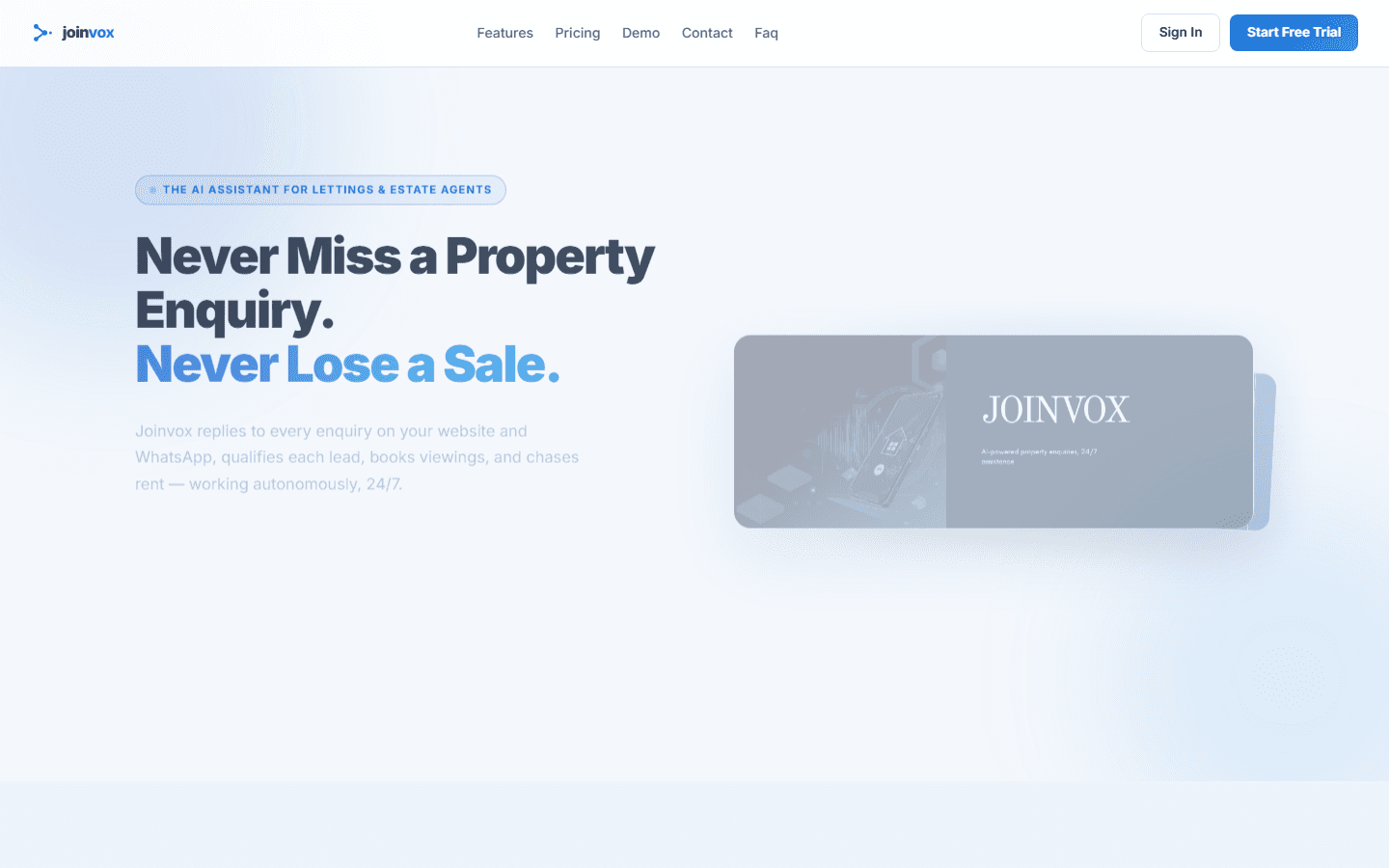 01 / LIVE
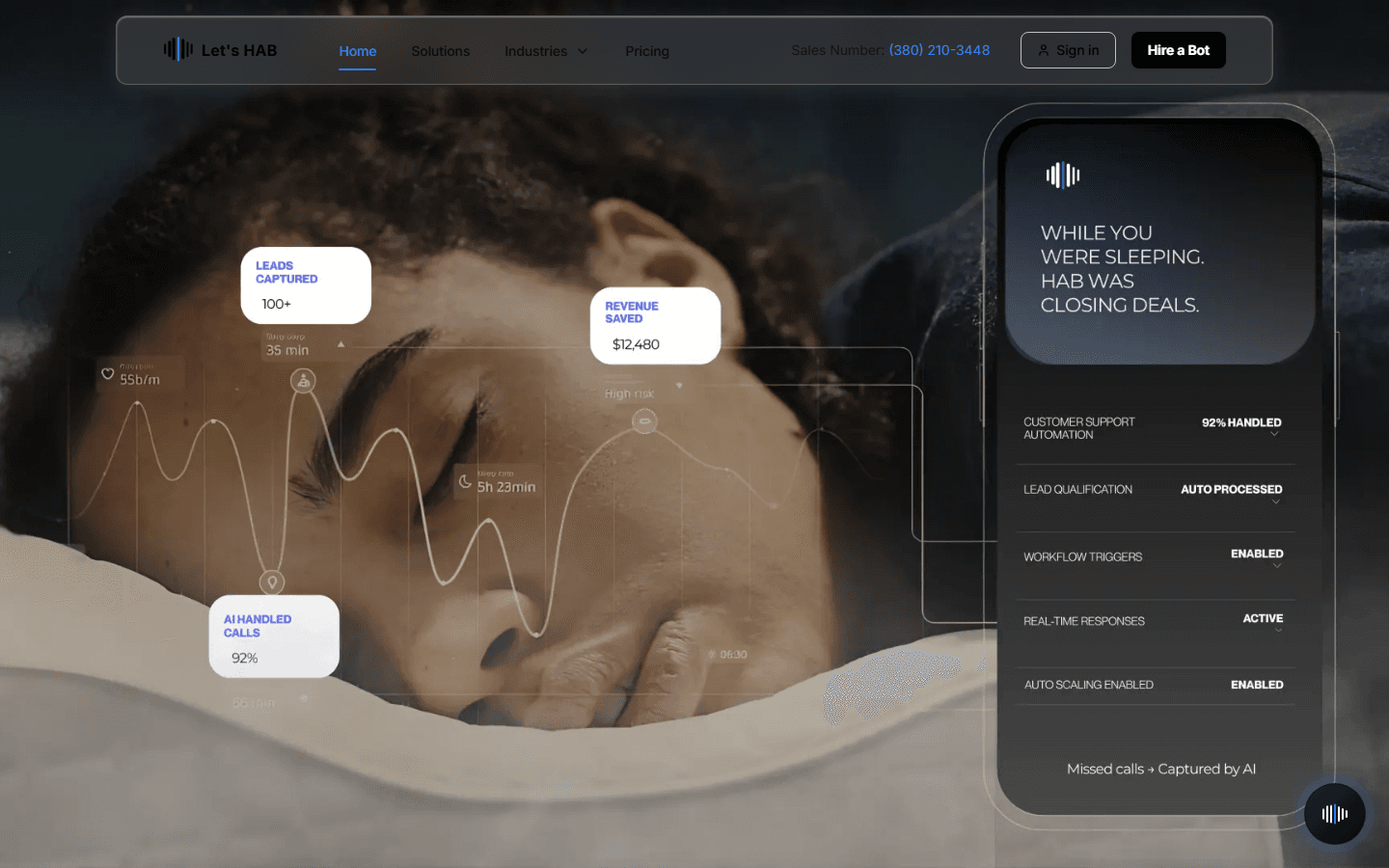 02 / LIVE
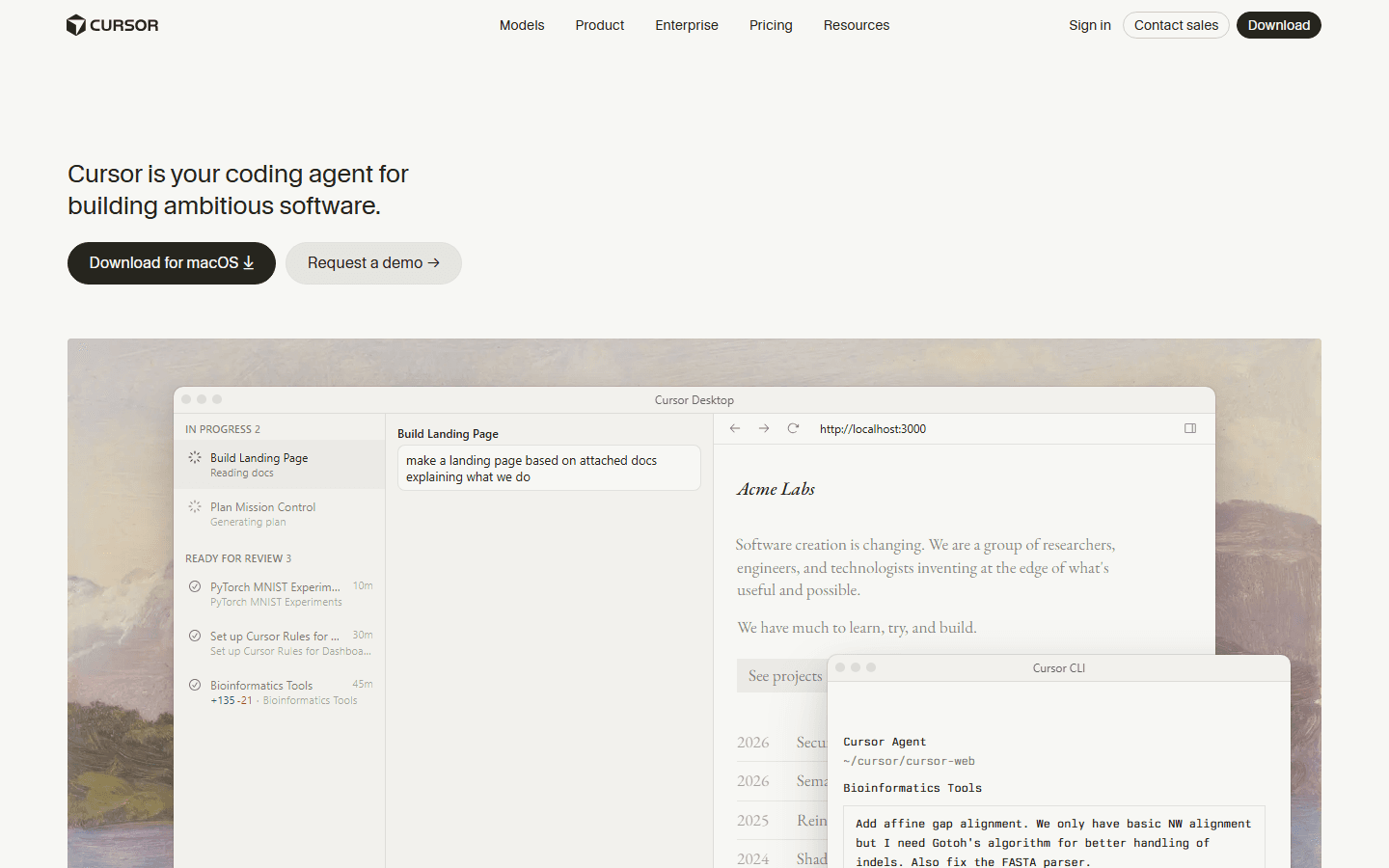 03 / LIVE
Operating scale
Calls processed
Concurrent agents
Platform uptime
Models shipped
Ways to buy
Three shapes.
No meter in any of them.
Every engagement is quoted after scoping - the shape is fixed here, the number comes from your volume, data, and integrations.
Campaign deployment
Call centers and support desks with a defined volume to handle.
- Voice or support agent build
- Your telephony, CRM, and knowledge systems
- Evaluation and call scoring
- Deployment on your hardware or VPC
Stack build
Teams that need a specialized model and the application around it.
- Dataset, fine-tuning, and evaluation
- Quantization for CPU-class serving
- Application harness, tools, and guardrails
- Weights, code, and runbooks handed over
Embedded engineering
Product teams with momentum that need senior AI depth inside the roadmap.
- Work inside your codebase and rituals
- Architecture and model decisions with your team
- Evaluation and safety practice installed
- Knowledge transfer as the default
Straight answers
The questions
buyers actually ask.
01Does CPU inference mean worse quality?
Not for a narrow task. A model fine-tuned and evaluated on your specific job routinely beats a general frontier model on that job, and it is the fine-tuning - not the parameter count - doing the work. Where a task genuinely needs a large model, we say so and size the hardware honestly.
02What does "no API cost" actually mean?
No metered vendor bill between you and your own product. You still pay for the machines the model runs on - hardware you likely already have, and a cost that does not rise every time a campaign performs well.
03Who owns the model at the end?
You do. Weights, adapters, prompts, harness code, evaluation sets, and documentation transfer to your organisation. Nothing is held back as leverage.
04Where does our data go?
Into your deployment and nowhere else. Training data, prompts, call recordings, and telemetry stay inside your boundary. Any third-party API is an explicit decision, never a default.
05How do you prove the system is safe?
Task-specific evaluation sets, red-team suites covering jailbreaks, prompt injection and exfiltration, defined refusal behaviour, permission boundaries, and regression runs on every model or prompt change. You can re-run all of it without us.
06How fast is a first deployment?
It depends on data access and integrations, so the first conversation ends with a scoped plan rather than a promised date. Discovery and de-risking come before any timeline is committed.
Ready when you areOwn the intelligence
Get in touch